The problem with “AI demos”
Most AI demos are optimized for immediacy:
- paste some text
- get a fluent answer
- feel the magic
Regulated operations are optimized for repeatability:
- every case has an owner
- decisions are traceable
- exceptions have a path
- risk is controlled
If your system doesn’t behave like an operations system, it doesn’t matter how smart the model is.
The operational mental model
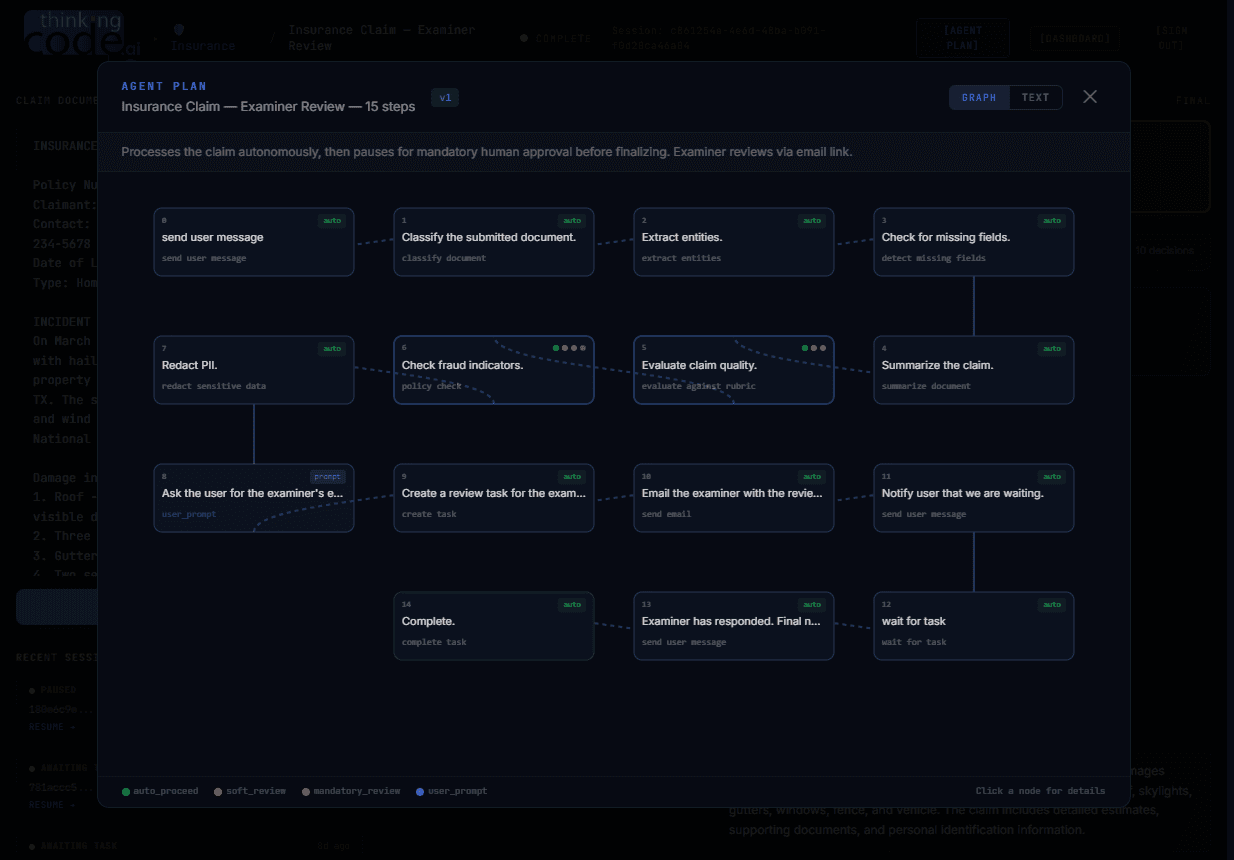
We build AI like this:
- Work arrives (email, fax, portal, attachments)
- It becomes a case (an ID, an owner, a state machine)
- AI performs bounded work (extract, classify, summarize, suggest)
- Policy gates apply (required fields, thresholds, approvals)
- A human reviews when needed (low confidence, adverse impact, $$)
- The result lands in the system-of-record (structured fields)
- Evidence is retained (inputs, outputs, rationale, who approved)
What we log (and what we don’t)
We log what helps answer:
- what happened?
- why?
- who approved?
- what was the source?
We avoid logging more sensitive raw content than necessary.
A good default is:
- document fingerprints + metadata
- extracted fields + confidence
- citations/anchors into source
- review actions + timestamps
- policy checks that passed/failed
Why this matters
Operational AI is not a UX pattern.
It’s a systems pattern: queues, controls, and evidence.
If you want this to work in insurance, healthcare, or PBM workflows, that’s the foundation.